-
Jaffna
-
English | Italian | Sinhala
-
Private AC Vehicles
An Island Fort Rising from the Sea — Kayts & the Hammenhiel Fort of the Jaffna Lagoon
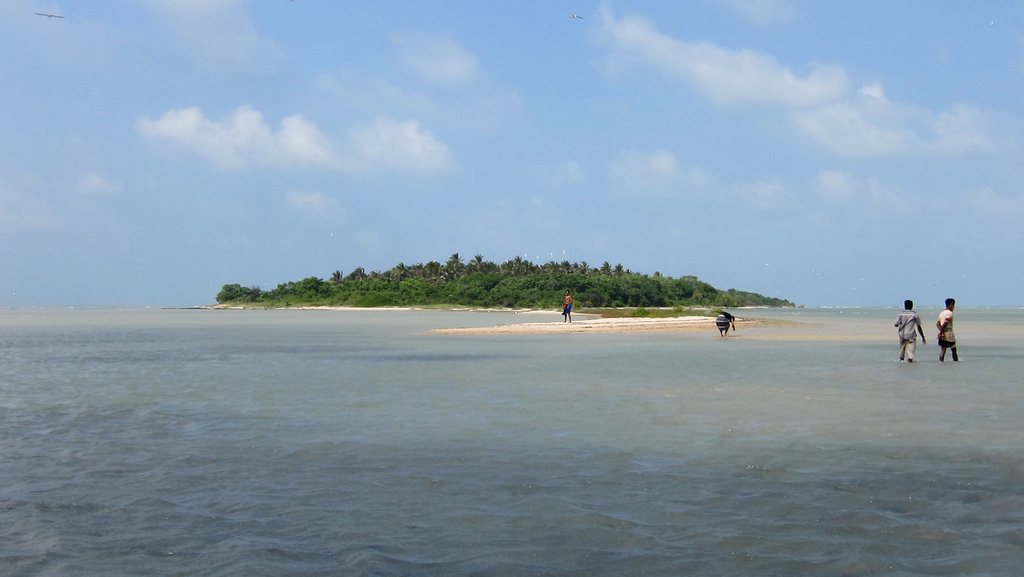
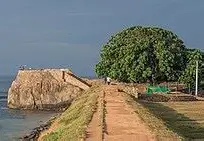
The Jaffna Lagoon is one of the most extraordinary bodies of water in Sri Lanka — vast, shallow, and scattered with islands connected by causeways and separated by channels that shift with the tides. Its strategic importance was not lost on the colonial powers who fought over the Jaffna peninsula for three centuries, and nowhere is that strategic history more dramatically expressed than at Hammenhiel Fort: a Dutch colonial fortification built in 1658 on a tiny rock island in the middle of the lagoon, its walls rising directly from the water with no beach, no approach, and no land on any side — only sea.
The name Hammenhiel means ‘Heel of the Ham’ in Dutch — a reference to the fort’s position at the narrow southern entrance to the Jaffna Lagoon, which the Dutch recognised as the chokepoint through which all maritime traffic between the peninsula and the open sea must pass. Whoever held Hammenhiel controlled the lagoon. The fort changed hands between Portuguese, Dutch, and British colonial powers, served as a prison for political detainees during the colonial period and again during the civil conflict of the 20th century, and today stands as one of the most visually remarkable colonial sites in northern Sri Lanka — its coral stone walls stained by centuries of salt air, its ramparts looking out across the lagoon in every direction to the flat horizon.
To reach it, you board a small boat at Kayts Harbour and cross a short stretch of open water — a crossing that immediately conveys why the fort was both formidable and isolated. From the water, the fort’s silhouette is unforgettable: a solid, low, square structure anchored on bare rock with nothing else around it, the lagoon shimmering in every direction and the palmyrah palms of the distant islands just visible on the horizon.
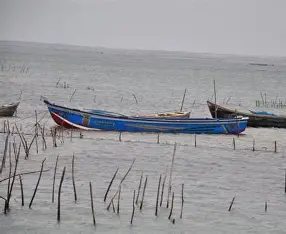
Kayts Island itself is a destination of its own character. Connected to the Jaffna mainland by a long causeway, it is a flat, wind-scoured island of fishing communities, colonial churches, and a way of life oriented entirely toward the lagoon and the sea. St. James Church — built by the Portuguese in the early colonial period and later used by the Dutch — stands at the centre of Kayts town with a quiet authority, its whitewashed walls and simple interior remarkably intact. The fishing harbour is active from before dawn, and the boats, nets, and daily rhythms of the community carry a texture that is entirely specific to this corner of the north.
The lagoon waters around Kayts are rich feeding grounds for waterbirds. Greater flamingos are regularly seen on the shallow flats, particularly between November and April. Spot-billed pelicans, painted storks, grey herons, and various species of tern and wader inhabit the lagoon edges throughout the year, making the crossing and the island shorelines rewarding for anyone with an interest in birds.
This is one of the most distinctive day tours available from Jaffna — combining colonial history, living island culture, lagoon wildlife, and a boat excursion to a fortress that looks, from the water, as though it has grown directly from the sea.
Highlights:
- Reach the extraordinary Hammenhiel Fort by boat — a 17th-century Dutch island fortress rising directly from the lagoon waters
- Explore one of the most dramatically situated colonial structures in all of Sri Lanka
- Walk through Kayts fishing village — a living community shaped entirely by the sea and the lagoon
- Visit the centuries-old St. James Church, a Portuguese-era colonial landmark standing at the island's heart